
Day Ahead market switching to 15-minute granularity
Day Ahead market is switching to 15-minute granularity. The aim is to increase integration and trading flexibility, but what is the actual impact on the market
October 1, 2025
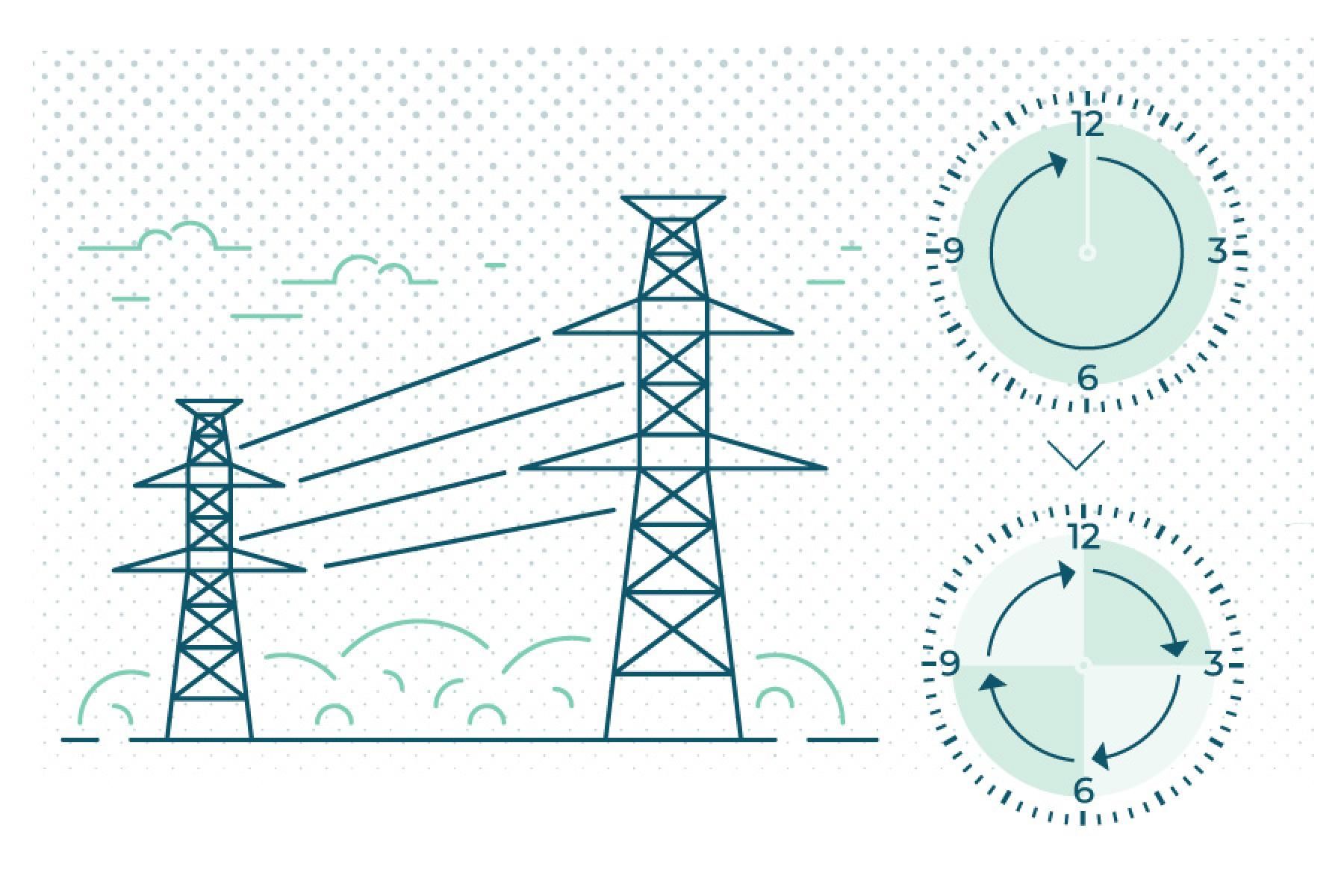
A structural shift in how electricity is traded across Europe — and what it means for market participants.
Since October 1st 2025, electricity across Europe is no longer bought and sold in hourly blocks. The market now operates in 15-minute intervals — a change known as the "15-Minute MTU Switch." Instead of submitting a single offer for, say, 10:00–11:00, market participants now submit four separate offers: one for each quarter-hour within that window.
This is not a minor technical tweak. It is a structural reform driven by the EU's Clean Energy Package, aimed at better integrating renewable energy, harmonising wholesale and balancing mechanisms, and enabling more precise use of cross-border transmission lines.
Why the hourly market was no longer enough
Solar and wind generation can fluctuate sharply within a single hour — a cloud passing over a solar farm, or a gust of wind dying down, can shift production within minutes. At the same time, flexible assets like batteries, industrial demand response, and electric vehicles are increasingly able to react in near real time.
The hourly market could not reflect these dynamics. Prices were averaged across 60 minutes, masking intra-hour volatility and reducing the economic signal for flexible resources. Moving to 15-minute blocks closes that gap: prices now follow the actual rhythm of supply and demand.
A concrete example
At 2:00 pm, sunshine drives high solar output and a low price. By 2:30 pm, cloud cover cuts production sharply — and the price rises. Previously, both moments shared the same hourly average price. Now, each 15-minute window has its own price, creating accurate signals and real incentive to react.
What changes for market participants
The most immediate operational impact is scale: the market moves from 24 to 96 data points per day. Forecasting models, trading systems, and IT infrastructure all need to operate at finer granularity. Teams that previously planned in hourly blocks now need to think, optimise, and respond in 15-minute windows.
Early price data is already showing a "sawtooth" pattern within the same hour — particularly in the morning and evening when solar output ramps up or drops. This reflects uneven liquidity as conventional generators still often bid hourly, while renewables and batteries increasingly operate at 15-minute resolution. Over time, as more participants adapt, this effect should stabilise.
At Nodis Consulting, we know our way around time series and how they are embedded in business processes. We have supported clients through this transition — including 15-minute forecast optimisation of energy volumes for day-ahead trading, covering grid losses with greater accuracy, and updating BRP trading processes to align with the new market time unit.